Buy siendo.eu ?
We are moving the project
siendo.eu .
Are you interested in purchasing the domain
siendo.eu ?
domain@kv-gmbh.de · 0541-91531010
Buy siendo.eu ?
What is the difference between stimulus discrimination and stimulus generalization?
Stimulus discrimination refers to the ability to differentiate between similar stimuli and respond differently to each one. This means that an individual can identify specific differences between stimuli and respond accordingly. On the other hand, stimulus generalization occurs when a response that was originally elicited by a specific stimulus is also produced in the presence of a similar, but not identical, stimulus. In this case, the individual is unable to distinguish between the original stimulus and the similar one, leading to a generalized response. **
Is tasting a stimulus?
Tasting is not considered a stimulus itself, but rather a sensory experience that occurs in response to a stimulus. The stimulus for tasting is the food or drink that comes into contact with taste receptors on the tongue, which then send signals to the brain to interpret the taste. Therefore, tasting is the result of a stimulus, rather than being the stimulus itself. **


Similar search terms for Stimulus
Top-Angebote
Products related to Stimulus:
-
DK Ayurveda: An Ancient System of Holistic Health to Bring Balance and Wellness to Your Life (A Little Book of Self Care)Make Ayurveda an indispensable part of your daily routine with this step-by-step guide to holistic balance and wellness. For a natural approach to self-healing, alternative medicine, and wellness, expert Sonja Shah-Williams has tailored remedies including Ayurveda recipes, skincare, yoga, and mindful meditation techniques. Harness the power of alternative therapies and discover: - What Ayurveda is and the benefits of the practice - Easy to follow, step by step illustrated guide to Ayurvedic practices - Ayurvedic super-foods and recipes - How to easily incorporate holistic practices into daily life - Positive affirmations, mindfulness techniques and exercises Modern science has proved the effectiveness of Ayurveda as a view of the world based on ancient beliefs that everything is connected and that balance is the key to wellbeing. Ayurveda focuses on the prevention of disease by focusing on anti-inflammatory diets, mindful meditation, and massages. This practical guide is an Ayurvedic consultation at your disposal. This little self-care book will take you on a breathtaking journey of holistic healing. It begins by unpacking what Ayurveda is and the benefits of the practice. This reference book includes wellness practices designed to uplift the mind, body, and spirit and healing treatments designed to address, relieve, and help cure a range of common conditions.4,95 £*Shipping: 1,99 £Secure redirect to the provider
-
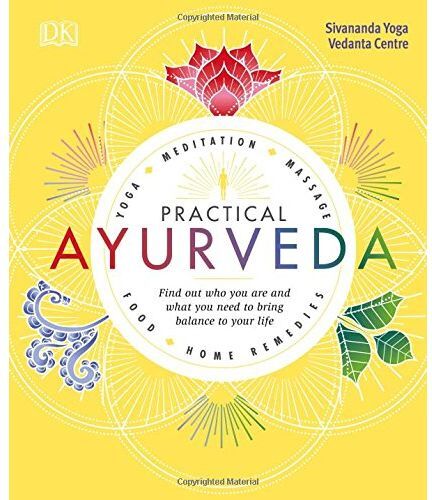
DK Practical Ayurveda – Find Out Who You Are and What You Need to Bring Balance to Your Life Holistic Health & Ayurvedic Wellness GuideDiscover the ancient wisdom of Ayurveda with Practical Ayurveda: Find Out Who You Are and What You Need to Bring Balance to Your Life, a clear and accessible guide to holistic wellbeing. Rooted in centuries of traditional Indian medicine, Ayurveda focuses on understanding your unique body type—or dosha—to achieve harmony between body, mind, and spirit. This practical guide helps readers identify their personal constitution and learn simple lifestyle, diet, and wellness practices to restore natural balance. Through easy explanations, self-assessment tools, and practical advice, this book introduces readers to Ayurvedic principles including nutrition, daily routines, herbal remedies, and mindful living. What You’ll Discover: How to identify your Ayurvedic dosha (Vata, Pitta, or Kapha) Practical tips for improving health, energy, and balance Guidance on Ayurvedic diet and lifestyle practices Natural approaches to managing stress and wellbeing Simple steps to integrate ancient wisdom into modern life Perfect for beginners and anyone interested in natural health, holistic living, and mind-body balance, Practical Ayurveda offers an inspiring introduction to one of the world’s oldest healing traditions.7,99 £*Shipping: 2,99 £Secure redirect to the provider
-
HODDER PUBLISHING Sane New World: Taming the Mind by Ruby Wax – Mental Health & Mindfulness GuideThe mental health and mindfulness bestseller from A Mindfulness Guide for the Frazzled and How to be Human author Ruby Wax; who shows us why and how our minds can send us mad and how we can rewire our thinking to calm ourselves in a frenetic world. 'Finally - a map for the troubled human mind. And it's funny.' -Caitlin Moran Ruby Wax - comedian; writer and mental health campaigner - shows us how our minds can jeopardize our sanity. With her own periods of depression and now a Masters from Oxford in Mindfulness-based Cognitive Therapy to draw from; she explains how our busy; chattering; self-critical thoughts drive us to anxiety and stress. If we are to break the cycle; we need to understand how our brains work; rewire our thinking and find calm in a frenetic world. Helping you become the master; not the slave; of your mind; here is the manual to saner living.4,90 £*Shipping: 1,99 £Secure redirect to the provider
-
KitchenCuration Healing Quartz Crystal Water Bottle For Wellness & Energy Balance FluoriteRefresh your daily routine with a beautifully designed crystal water bottle that combines mindful living with elegant style. Crafted for wellness enthusiasts, yoga lovers, and anyone seeking a calming hydration experience, this bottle features a...49,97 $*Shipping: 0,00 $Secure redirect to the provider



-
What is a stimulus?
A stimulus is any event or situation that evokes a response from an organism. It can be a physical object, sound, smell, taste, or any other form of input that triggers a reaction. In psychology, a stimulus is used to study how organisms perceive and respond to their environment. It plays a crucial role in understanding behavior and learning processes. **
-
What is an inadequate stimulus?
An inadequate stimulus is a stimulus that is not strong enough to evoke a response from a particular receptor or system. This means that the stimulus does not have the necessary intensity or specificity to trigger a reaction. In the context of sensory systems, an inadequate stimulus may not be able to activate the relevant sensory receptors or nerve pathways to generate a response. This concept is important in understanding how different stimuli can elicit different responses in biological systems. **
-
What are economic stimulus measures?
Economic stimulus measures are policies implemented by governments to boost economic activity during times of recession or slow growth. These measures can include tax cuts, increased government spending on infrastructure projects, and monetary policies such as lowering interest rates. The goal of these measures is to stimulate consumer spending, business investment, and overall economic growth. By injecting money into the economy, these measures aim to create jobs, increase demand for goods and services, and ultimately improve the overall economic outlook. **
-
What is an adequate stimulus?
An adequate stimulus is the specific form of energy or signal that a sensory receptor is designed to detect and respond to. It is the type of input that a sensory receptor is most sensitive to and will produce the strongest response from. For example, the adequate stimulus for the visual system is light, for the auditory system is sound waves, and for the olfactory system is specific chemical molecules. The concept of adequate stimulus helps to explain how different sensory systems are specialized to detect and process specific types of information from the environment. **


What is a non-adequate stimulus?
A non-adequate stimulus is a stimulus that does not elicit a response from a particular sensory receptor or system. In other words, it is a stimulus that does not match the specific type of input that a sensory receptor is designed to detect and respond to. For example, shining a light on the skin would not elicit a response from a taste receptor, making light a non-adequate stimulus for taste perception. **
What is a good muscle stimulus?
A good muscle stimulus is one that challenges the muscle to work at a high intensity, causing it to adapt and grow stronger. This can be achieved through exercises that involve resistance, such as weightlifting, bodyweight exercises, or resistance bands. The stimulus should be progressive, meaning that the intensity or volume of the exercise is gradually increased over time to continue challenging the muscle. Additionally, allowing for adequate rest and recovery between workouts is important to ensure the muscle has time to repair and grow. **
Top-Angebote
Products related to Stimulus:
-
Uplifted Finds Multi Stimulus Feather Wand Collection Multi Stimulus Feather Wand CollectionMaximize your pets agility with the MultiStimulus Interaction Kit, an 11piece engagement system engineered with variableflight logic. This professionalgrade set features a telescopic wand architecture paired with multiple interchangeable...38,97 $*Shipping: 0,00 $Secure redirect to the provider
-
Uplifted Finds Kinetic Slow Food Multi Stimulus Station blueElevate your pets physical and mental engagement with the KineticSlow Food Station, a highperformance enrichment tool engineered with dualmode stimulation logic. This hybrid system combines a gravitationalflow treat dispenser with an orbital...55,97 $*Shipping: 0,00 $Secure redirect to the provider
-
DK Ayurveda: An Ancient System of Holistic Health to Bring Balance and Wellness to Your Life (A Little Book of Self Care)Make Ayurveda an indispensable part of your daily routine with this step-by-step guide to holistic balance and wellness. For a natural approach to self-healing, alternative medicine, and wellness, expert Sonja Shah-Williams has tailored remedies including Ayurveda recipes, skincare, yoga, and mindful meditation techniques. Harness the power of alternative therapies and discover: - What Ayurveda is and the benefits of the practice - Easy to follow, step by step illustrated guide to Ayurvedic practices - Ayurvedic super-foods and recipes - How to easily incorporate holistic practices into daily life - Positive affirmations, mindfulness techniques and exercises Modern science has proved the effectiveness of Ayurveda as a view of the world based on ancient beliefs that everything is connected and that balance is the key to wellbeing. Ayurveda focuses on the prevention of disease by focusing on anti-inflammatory diets, mindful meditation, and massages. This practical guide is an Ayurvedic consultation at your disposal. This little self-care book will take you on a breathtaking journey of holistic healing. It begins by unpacking what Ayurveda is and the benefits of the practice. This reference book includes wellness practices designed to uplift the mind, body, and spirit and healing treatments designed to address, relieve, and help cure a range of common conditions.4,95 £*Shipping: 1,99 £Secure redirect to the provider
-
DK Practical Ayurveda – Find Out Who You Are and What You Need to Bring Balance to Your Life Holistic Health & Ayurvedic Wellness GuideDiscover the ancient wisdom of Ayurveda with Practical Ayurveda: Find Out Who You Are and What You Need to Bring Balance to Your Life, a clear and accessible guide to holistic wellbeing. Rooted in centuries of traditional Indian medicine, Ayurveda focuses on understanding your unique body type—or dosha—to achieve harmony between body, mind, and spirit. This practical guide helps readers identify their personal constitution and learn simple lifestyle, diet, and wellness practices to restore natural balance. Through easy explanations, self-assessment tools, and practical advice, this book introduces readers to Ayurvedic principles including nutrition, daily routines, herbal remedies, and mindful living. What You’ll Discover: How to identify your Ayurvedic dosha (Vata, Pitta, or Kapha) Practical tips for improving health, energy, and balance Guidance on Ayurvedic diet and lifestyle practices Natural approaches to managing stress and wellbeing Simple steps to integrate ancient wisdom into modern life Perfect for beginners and anyone interested in natural health, holistic living, and mind-body balance, Practical Ayurveda offers an inspiring introduction to one of the world’s oldest healing traditions.7,99 £*Shipping: 2,99 £Secure redirect to the provider
-
What is the difference between stimulus discrimination and stimulus generalization?
Stimulus discrimination refers to the ability to differentiate between similar stimuli and respond differently to each one. This means that an individual can identify specific differences between stimuli and respond accordingly. On the other hand, stimulus generalization occurs when a response that was originally elicited by a specific stimulus is also produced in the presence of a similar, but not identical, stimulus. In this case, the individual is unable to distinguish between the original stimulus and the similar one, leading to a generalized response. **
-
Is tasting a stimulus?
Tasting is not considered a stimulus itself, but rather a sensory experience that occurs in response to a stimulus. The stimulus for tasting is the food or drink that comes into contact with taste receptors on the tongue, which then send signals to the brain to interpret the taste. Therefore, tasting is the result of a stimulus, rather than being the stimulus itself. **
-
What is a stimulus?
A stimulus is any event or situation that evokes a response from an organism. It can be a physical object, sound, smell, taste, or any other form of input that triggers a reaction. In psychology, a stimulus is used to study how organisms perceive and respond to their environment. It plays a crucial role in understanding behavior and learning processes. **
-
What is an inadequate stimulus?
An inadequate stimulus is a stimulus that is not strong enough to evoke a response from a particular receptor or system. This means that the stimulus does not have the necessary intensity or specificity to trigger a reaction. In the context of sensory systems, an inadequate stimulus may not be able to activate the relevant sensory receptors or nerve pathways to generate a response. This concept is important in understanding how different stimuli can elicit different responses in biological systems. **
Similar search terms for Stimulus
-
HODDER PUBLISHING Sane New World: Taming the Mind by Ruby Wax – Mental Health & Mindfulness GuideThe mental health and mindfulness bestseller from A Mindfulness Guide for the Frazzled and How to be Human author Ruby Wax; who shows us why and how our minds can send us mad and how we can rewire our thinking to calm ourselves in a frenetic world. 'Finally - a map for the troubled human mind. And it's funny.' -Caitlin Moran Ruby Wax - comedian; writer and mental health campaigner - shows us how our minds can jeopardize our sanity. With her own periods of depression and now a Masters from Oxford in Mindfulness-based Cognitive Therapy to draw from; she explains how our busy; chattering; self-critical thoughts drive us to anxiety and stress. If we are to break the cycle; we need to understand how our brains work; rewire our thinking and find calm in a frenetic world. Helping you become the master; not the slave; of your mind; here is the manual to saner living.4,90 £*Shipping: 1,99 £Secure redirect to the provider
-
KitchenCuration Healing Quartz Crystal Water Bottle For Wellness & Energy Balance FluoriteRefresh your daily routine with a beautifully designed crystal water bottle that combines mindful living with elegant style. Crafted for wellness enthusiasts, yoga lovers, and anyone seeking a calming hydration experience, this bottle features a...49,97 $*Shipping: 0,00 $Secure redirect to the provider
-
Uplifted Finds Kinetic Slow Food Multi Stimulus Station yellowElevate your pets physical and mental engagement with the KineticSlow Food Station, a highperformance enrichment tool engineered with dualmode stimulation logic. This hybrid system combines a gravitationalflow treat dispenser with an orbital...55,97 $*Shipping: 0,00 $Secure redirect to the provider
-
Uplifted Finds Kinetic Slow Food Multi Stimulus Station greenElevate your pets physical and mental engagement with the KineticSlow Food Station, a highperformance enrichment tool engineered with dualmode stimulation logic. This hybrid system combines a gravitationalflow treat dispenser with an orbital...55,97 $*Shipping: 0,00 $Secure redirect to the provider
-
What are economic stimulus measures?
Economic stimulus measures are policies implemented by governments to boost economic activity during times of recession or slow growth. These measures can include tax cuts, increased government spending on infrastructure projects, and monetary policies such as lowering interest rates. The goal of these measures is to stimulate consumer spending, business investment, and overall economic growth. By injecting money into the economy, these measures aim to create jobs, increase demand for goods and services, and ultimately improve the overall economic outlook. **
-
What is an adequate stimulus?
An adequate stimulus is the specific form of energy or signal that a sensory receptor is designed to detect and respond to. It is the type of input that a sensory receptor is most sensitive to and will produce the strongest response from. For example, the adequate stimulus for the visual system is light, for the auditory system is sound waves, and for the olfactory system is specific chemical molecules. The concept of adequate stimulus helps to explain how different sensory systems are specialized to detect and process specific types of information from the environment. **
-
What is a non-adequate stimulus?
A non-adequate stimulus is a stimulus that does not elicit a response from a particular sensory receptor or system. In other words, it is a stimulus that does not match the specific type of input that a sensory receptor is designed to detect and respond to. For example, shining a light on the skin would not elicit a response from a taste receptor, making light a non-adequate stimulus for taste perception. **
-
What is a good muscle stimulus?
A good muscle stimulus is one that challenges the muscle to work at a high intensity, causing it to adapt and grow stronger. This can be achieved through exercises that involve resistance, such as weightlifting, bodyweight exercises, or resistance bands. The stimulus should be progressive, meaning that the intensity or volume of the exercise is gradually increased over time to continue challenging the muscle. Additionally, allowing for adequate rest and recovery between workouts is important to ensure the muscle has time to repair and grow. **
* All prices are inclusive of VAT and, if applicable, plus shipping costs. The offer information is based on the details provided by the respective shop and is updated through automated processes. Real-time updates do not occur, so deviations can occur in individual cases. ** Note: Parts of this content were created by AI.